Moving to Croatia: Complete Expat Guide (2026)
Advertisement
Why Croatia?
Croatia has emerged as one of Europe’s most underrated relocation destinations. Since joining the Schengen Area in January 2023 and adopting the euro, the country combines Mediterranean lifestyle with EU travel freedom — without the cost of Western Europe.
The dedicated digital nomad visa (introduced in 2021) offers something unusual: zero income tax for visa holders earning from foreign employers. Combined with a 1,777 km coastline, mild climate, growing tech scene in Zagreb, and a cost of living roughly half that of Italy or France, Croatia has become a magnet for remote workers, retirees, and EU-curious professionals.
The trade-off: bureaucracy is slower than in northern Europe, the language has a steep learning curve, and outside major cities and the coast, English fluency is moderate. For those willing to navigate that, Croatia delivers exceptional quality of life.
Visa Options
EU/EEA Citizens
If you hold an EU or EEA passport (or Swiss nationality), you can live and work in Croatia indefinitely. You must register with the local police within 90 days of arrival to obtain a residence certificate (potvrda o prijavi privremenog boravka). After 5 years of legal residence, you can apply for permanent residence.
Croatia Digital Nomad Visa
Croatia’s digital nomad permit, introduced in 2021, is one of Europe’s most attractive options for remote workers.
- Income requirement: Approximately EUR 2,540/month (verified through bank statements or employment contract)
- Duration: Up to 12 months (not directly renewable — you must leave Croatia for at least 6 months before reapplying)
- Tax: 0% income tax in Croatia if you work for a non-Croatian employer or your own foreign-registered business
- Eligibility: Non-EU/EEA citizens working remotely for clients/employers outside Croatia
The 6-month gap between renewals is a key limitation if you want to settle long-term. Many nomads use the year as a “trial run” before applying for a different residence permit (work, business, or family) afterward.
Compare with other digital nomad visas →
Temporary Stay Permit (Boravak)
For non-EU citizens not eligible for the digital nomad visa, the standard temporary stay permit covers most other situations:
- Work permit (boravak na temelju rada): requires a Croatian employer to sponsor you
- Family reunification: for spouses, children, or dependent parents of Croatian residents
- Study: for enrolled students at Croatian institutions
- Business owner / self-employed: requires registering a Croatian company (d.o.o. or obrt)
Each type has specific income and documentation requirements. Permits are typically issued for 1-3 years and renewable.
EU Blue Card
Croatia issues the EU Blue Card to highly skilled non-EU professionals with a recognized degree and a job offer meeting the salary threshold (approximately EUR 28,000 per year as of 2026). The Blue Card grants residence and work rights and can lead to long-term EU resident status.
Use our Visa Checker and Work Permit Guide to explore options.
Cost of Living
Croatia is significantly cheaper than Western Europe but has seen rapid increases in coastal areas (Split, Dubrovnik, Hvar) since EU and Schengen accession.
Approximate monthly costs for a single person (as of 2026):
- Rent (1-bedroom, city center): EUR 700-1,100 in Zagreb, EUR 800-1,300 in Split (high season summer doubles), EUR 500-800 in inland cities (Osijek, Rijeka, Pula off-season)
- Utilities: EUR 100-180 per month (heating in winter is significant for older apartments)
- Groceries: EUR 200-350 per month
- Public transport: EUR 35-50 per month for a city pass in Zagreb
- Dining out: EUR 8-15 for a meal at a local konoba (tavern), EUR 15-25 at mid-range restaurants
- Health insurance (private): EUR 30-80 per month for expats not covered by HZZO
Total monthly expenses: approximately EUR 1,500-2,200 in Zagreb, EUR 1,800-2,800 in Split (off-season), and EUR 1,200-1,700 in smaller inland cities.
Compare costs with your home city →
Tax
Standard Income Tax Rates
Croatia uses a progressive tax system:
- 20%: Annual income up to EUR 50,400
- 30%: Income above EUR 50,400
Plus local surcharges (prirez) that vary by municipality (0-18%, with Zagreb at 18%).
Digital Nomad Visa Holders
If you hold the digital nomad visa and your income comes from non-Croatian sources, you are exempt from Croatian income tax for the duration of your visa. This is one of the most attractive nomad visa tax structures in the EU.
Tax Residency
You become a Croatian tax resident if you:
- Spend more than 183 days in Croatia during a calendar year, OR
- Have your primary home or center of vital interests in Croatia
Croatia has tax treaties with most major countries. Cross-border situations should be reviewed with a Croatian tax advisor.
Estimate your net salary in Croatia →
Check your tax residency status →
Healthcare
Croatia has a public healthcare system (HZZO — Hrvatski zavod za zdravstveno osiguranje) that all legal residents must enrol in.
HZZO (Public Health Insurance)
- Mandatory for residents
- Funded through payroll contributions (employees) or self-payments (self-employed)
- Approximate cost: EUR 70-120 per month for self-payers
- Covers GP visits, hospital care, prescription medications (with co-pay), and emergency care
Private Healthcare
Many expats supplement HZZO with private insurance for shorter wait times and English-speaking doctors. Private hospitals in Zagreb (Sveti Duh, Polyclinic Aviva) and Split (Medikol) are well-equipped.
For visa applications and short-term coverage, World Nomads offers travel insurance suitable for the transition period before HZZO enrolment.
Banking and Money
Opening a Croatian bank account requires a residence certificate (OIB — Croatian tax number) and proof of address. Major banks include Zagrebačka banka, Privredna banka Zagreb (PBZ), Erste Bank, and Raiffeisen.
Croatia adopted the euro in January 2023, so the Croatian kuna is no longer in circulation.
For international transfers and multi-currency holdings, Wise is widely used among expats. Wise lets you receive salary in different currencies and convert at the mid-market rate, avoiding the markups Croatian banks typically apply.
Disclosure: The Wise link above is an affiliate link. See our disclaimer for details.
Where to Live
Zagreb
Croatia’s capital and largest city (population ~770,000). Vibrant tech scene, growing nomad community, excellent public transport, and cultural amenities. Winters are cold and grey. Best for: tech workers, professionals seeking a metro environment, EU-style city living.
Split
The Adriatic’s economic center (population ~150,000). Roman ruins meet beach lifestyle. Significantly more expensive than Zagreb in summer; quiet and affordable off-season. Best for: digital nomads who prioritize Mediterranean lifestyle, beach access, year-round mild climate.
Rijeka
Croatia’s third-largest city (population ~110,000), a port city in Kvarner Bay. More affordable than Split, with strong industrial heritage and growing creative scene. Less touristy. Best for: budget-conscious expats wanting coastal living without summer crowds.
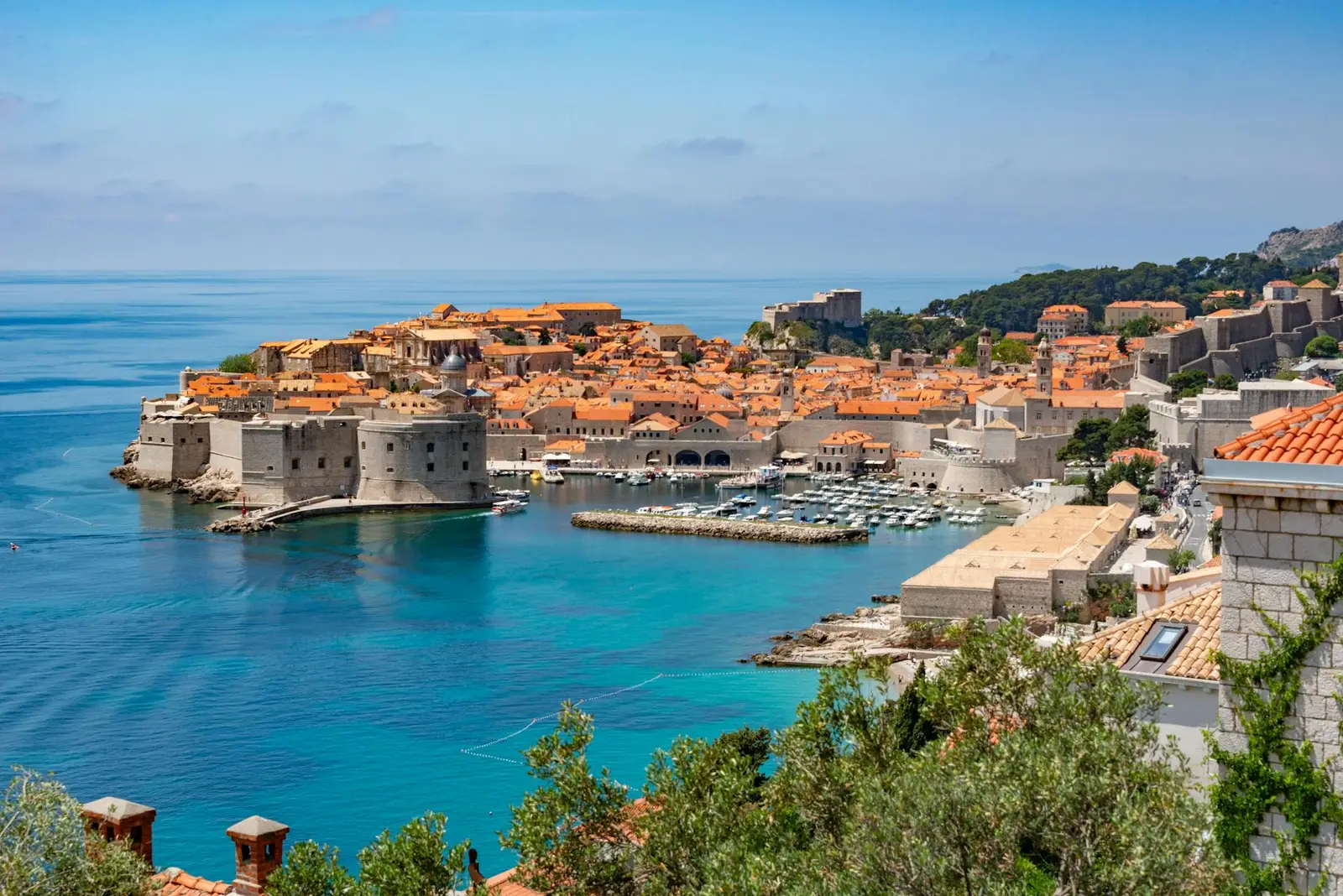
Dubrovnik
Iconic walled city on the southern coast. Stunning, but extremely seasonal — summer prices triple, off-season is quiet to a fault. Best for: short-term retreats, not full-time relocation.
Istria (Pula, Rovinj, Poreč)
Italian-influenced peninsula in the northwest. Mediterranean climate, excellent food, and a more relaxed pace. Increasingly popular with expats. Best for: those seeking smaller-town living with cultural richness.
Hvar, Brač, and the Islands
Beautiful but seasonal. Most are not viable for full-year living without strong local ties. Connectivity (ferries, internet) varies.
Practical Tips
-
Get your OIB early. The Croatian Tax Identification Number is required for nearly everything: opening a bank account, signing a lease, registering a SIM card. Apply at the local Tax Administration office immediately after arrival.
-
Register with the police within 90 days. EU citizens must obtain a residence certificate; non-EU citizens with visas register at MUP (Ministry of the Interior).
-
Bureaucracy moves slowly. Carry physical copies of every document. Always ask about expected timelines — and add 50%.
-
Learn basic Croatian. While English is widely spoken in Zagreb and the coast, dealing with banks, doctors, and government offices is much easier with conversational Croatian. iTalki connects you with native Croatian tutors for 1-on-1 lessons.
-
Coastal vs inland is a real divide. Summer on the coast is breathtaking but expensive and crowded. Inland (Zagreb, Slavonia) is cheaper, quieter, and more authentic. Spend time in both before committing.
-
Healthcare appointments take time. Routine specialist visits in HZZO can have months-long wait times. Many residents pay for occasional private appointments to skip queues.
-
Public transport is excellent in Zagreb but limited elsewhere. Outside the capital, having a car is effectively required for daily life — especially in Istria and the islands.
Key Resources
- Ministry of the Interior (MUP): mup.gov.hr — visa and residence permit information
- Croatian Ministry of Foreign Affairs: mvep.gov.hr — diplomatic missions and visa pre-info
- Tax Administration: porezna-uprava.gov.hr — OIB, taxes
- HZZO (Health Insurance): hzzo.hr — public health enrolment
Related Guides
- Croatia Digital Nomad Visa: requirements and tax details
- Living in Split — expat guide
- Living in Split — expat guide
- Visa requirements for Croatia
- Cost of living in Croatian cities
This guide is for informational purposes only and does not constitute legal or tax advice. Visa rules and tax regimes change frequently — verify with official Croatian authorities and qualified advisors before making decisions.
Advertisement
Continue exploring
Digital Nomad Visa
Croatia Digital Nomad Visa
Income, tax, duration, and step-by-step application.
Country Guide
Croatia expat overview
Cost of living, neighborhoods, healthcare, banking.
Visa Checker
Do I need a visa for Croatia?
Check requirements for your specific passport.
Work Permit
Work permit options for Croatia
Compare permit types, salary thresholds, and durations.
Cities in Croatia
Affiliate Disclosure
Some links in this article are affiliate links. If you make a purchase through these links, RoamHub may earn a small commission at no extra cost to you. We only recommend products and services we believe are genuinely useful for expats and digital nomads. See our full disclaimer.