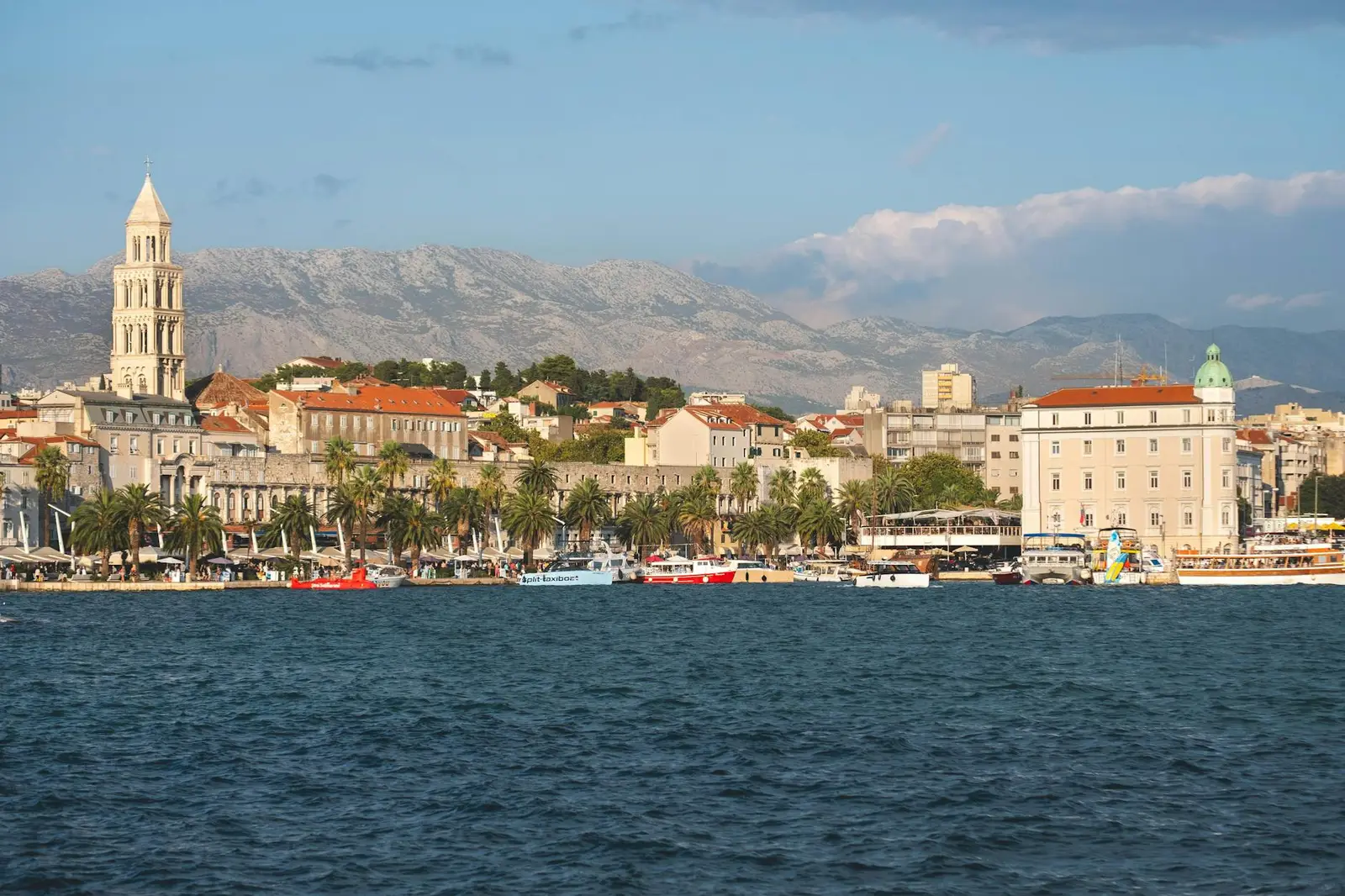
Split sits on the Dalmatian coast of Croatia, built around a Roman palace that is still partly inhabited today. It is smaller than Zagreb (and Dubrovnik is smaller still), but Split offers a better balance of cost, beach life, and year-round livability than either. The Croatian Digital Nomad Visa launched in 2021, and while it is non-renewable (you must leave for 6 months before reapplying), it is an easy path to 1 year of legal Adriatic life with no income tax on nomad income during the visa.
Croatian DNV + sea + Mediterranean lifestyle at noticeably lower cost than Italy or the French Riviera. Split is walkable, compact, and connects to the islands (Hvar, Brac, Vis) by ferry. Summer is busy with tourists; off-season is relaxed and local.
Advertisement
Population
160,000
Internet
200 Mbps avg
Budget (mid)
$1,800/mo
Timezone
UTC+1 / UTC+2 (DST)
Cost of living in Split
USD 1,400-2,400/month. Cheaper than Spain coastal equivalents.
Budget
$1,200
per month
Comfortable
$1,800
per month
Upscale
$2,800
per month
| Category | Typical range |
|---|---|
| Rent (1BR central) | USD 700-1,200 (summer prices can surge 2-3x) |
| Rent (1BR outside) | USD 500-800 |
| Groceries (monthly) | USD 300-450 |
| Utilities (monthly) | USD 130-220 |
| Coworking (monthly) | USD 160-260 |
| Transport (monthly) | USD 25 monthly Prometu pass |
| Meal (cheap / local) | USD 10-16 |
| Meal (mid restaurant) | USD 20-40 |
Advertisement
Where to live in Split
Old Town (Grad)
Inside the Roman palace. Touristy in summer, magical off-season.
Varos
Hillside, stone houses, quiet, cafes with a view.
Bacvice
City beach neighborhood. Walkable to centre, popular with nomads.
Firule / Meje
Residential, leafy, upscale, coastal.
Gripe / Manus
Closer to bus station, cheaper, less touristy.
Popular coworking spaces
- · Saltwater Coworking
- · Smart Office Split
- · Amosfera
- · Spacesbar
- · Nest Coworking Split
Food scene
Mediterranean Croatian cooking: grilled fish, black risotto (crni rizot), pasticada (slow-cooked beef), peka (meat baked under a dome). Olive oil and wine traditions are ancient. Konoba Marjan and Bokeria are beloved local restaurants. Green Market (Pazar) for produce.
Getting around
Walkable core. Buses (Prometu) cover outer districts. Ferries from Split port to islands and to Italy (Ancona, Pescara). Split airport connects to most of Europe.
Internet tip: Hrvatski Telekom, A1, and Telemach. Fibre coverage decent but not universal — ask before renting.
Visa notes
Croatian Digital Nomad Visa: USD 2,540+/month, 1 year, NON-RENEWABLE (must leave for 6 months before reapplying). Does not lead to permanent residence. EU citizens need only register after 3 months.
Healthcare & safety
Public HZZO for residents. Private clinics: Medico, Poliklinika Split. GP visits USD 50-90.
Very safe. Summer tourist crowds bring the usual pickpocket risk.
Pros
- + Adriatic sea and island access
- + Croatian DNV is simple
- + Low cost for a Mediterranean EU coast
- + Walkable small-city feel
- + Mild winters
Cons
- - Non-renewable visa (1 year max, then 6-month cooldown)
- - Summer tourist saturation
- - Smaller nomad community off-season
- - Croatian language
- - Limited inter-island flights
Best for
- · 1-year Adriatic experiences
- · Sailors and sea lovers
- · Off-season lifestyle nomads
Probably not for
- · Long-term EU residency seekers (use Portugal/Spain instead)
- · Summer-heat sensitive nomads
Climate
Mediterranean. Mild winters (8-13°C), hot dry summers (26-32°C).
Language
Croatian. English widely spoken in tourism and nomad areas.
Currency
Euro (EUR) — adopted 2023
Timezone
UTC+1 / UTC+2 (DST)
Other nomad cities
Related resources
Full Croatia country guide
Visa options, tax, cost of living, work permits.
Moving to Croatia
Step-by-step relocation guide: visa, costs, taxes, timeline.
Cost of Living tool
Compare Split with your current city.
Digital nomad visa comparator
Compare long-stay visas by income, duration, tax.
Tax residency calculator
See where you'd be tax resident if you split time.
Schengen 90/180 calculator
Plan your days if you're non-EU.