South Africa · Africa
Living in Cape Town
World-class nature and a 3-year Remote Work Visa
Last updated: April 2026
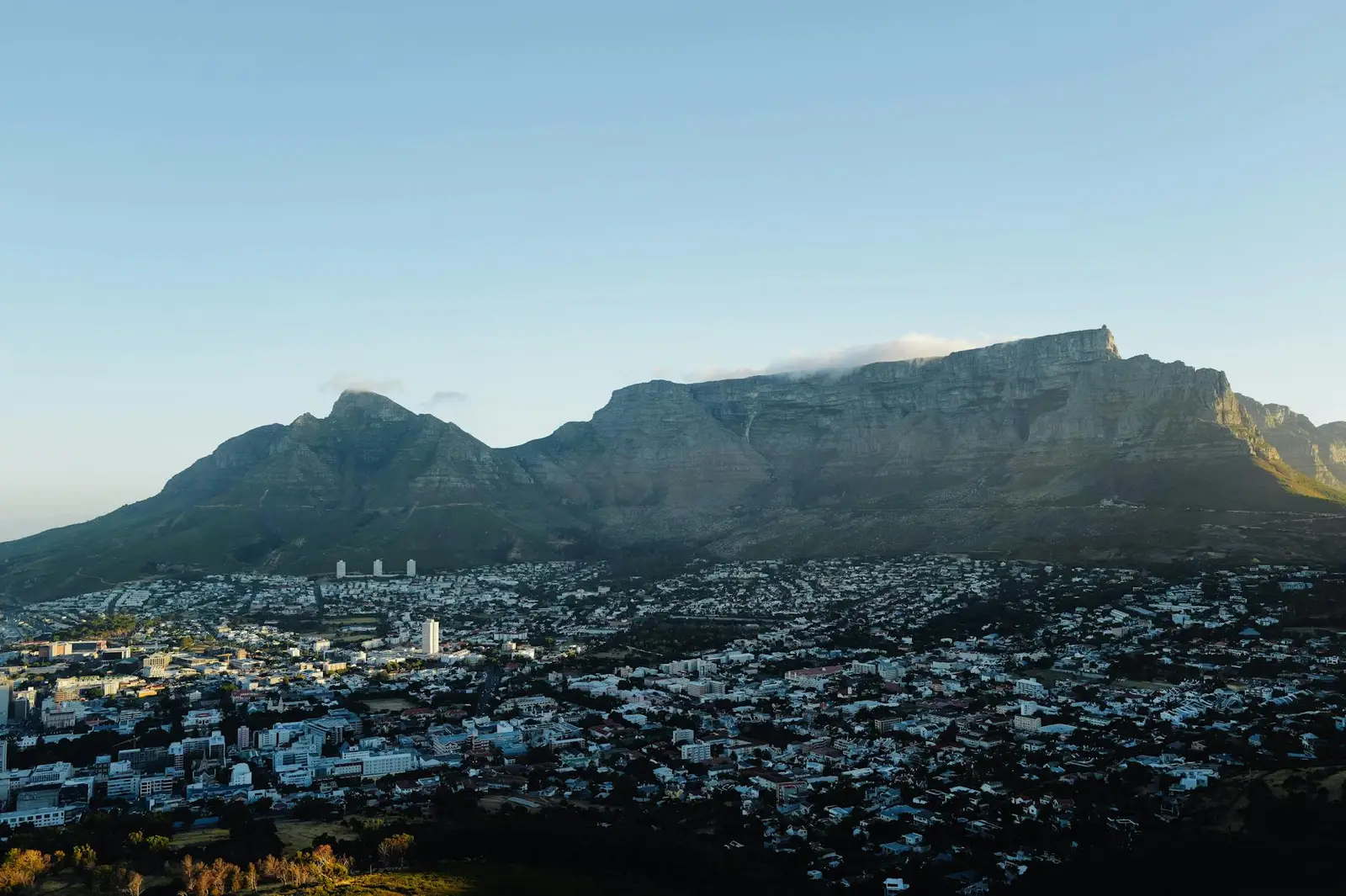
Cape Town consistently ranks among the most beautiful cities in the world. Table Mountain looms over the city centre, two oceans meet nearby, and wine country is 30 minutes away. The South African Remote Work Visa (launched 2024) grants a 3-year stay with ZAR 80,000+ monthly income — competitive with most European programmes. Safety is more nuanced than Europe — you learn which areas to avoid — but the reward is a quality of life many nomads find unmatched.
Nature access is world-class: mountains, beaches, wine country, safari within a few hours. Remote Work Visa gives 3 years. UTC+2 timezone offers excellent overlap with Europe. Cost is significantly lower than comparable European coastal cities for better weather and far more space.
Advertisement
Population
4,600,000
Internet
200 Mbps avg
Budget (mid)
$2,300/mo
Timezone
UTC+2 (no DST)
Cost of living in Cape Town
USD 1,800-3,000/month. Rent moderate; imported goods expensive.
Budget
$1,500
per month
Comfortable
$2,300
per month
Upscale
$3,800
per month
| Category | Typical range |
|---|---|
| Rent (1BR central) | USD 900-1,500 (Camps Bay, Sea Point) |
| Rent (1BR outside) | USD 500-900 |
| Groceries (monthly) | USD 300-450 |
| Utilities (monthly) | USD 100-180 (load-shedding may increase with backup) |
| Coworking (monthly) | USD 170-280 |
| Transport (monthly) | USD 100-150 (car is common, MyCiti bus for centre) |
| Meal (cheap / local) | USD 6-10 |
| Meal (mid restaurant) | USD 15-30 |
Advertisement
Where to live in Cape Town
Sea Point / Green Point
Most nomad-popular. Coastal promenade, cafes, restaurants, safe to walk.
De Waterkant / Bo-Kaap
Trendy, colorful, central, walkable.
Camps Bay / Clifton
Iconic beach suburbs, upscale, stunning views, pricey.
Observatory (Obs)
Bohemian, student, close to UCT, cheaper.
Constantia
Wine country suburb, family-oriented, quiet.
Popular coworking spaces
- · Workshop17 (multiple) — largest chain
- · The Business Exchange
- · Regus Cape Town
- · Inner City Ideas Cartel
- · Neighbourgood Cowork
Food scene
Cape Malay cooking (bobotie, bredie, samoosas), seafood (snoek, yellowfin), braai culture. Famous restaurants: La Colombe, Chef’s Warehouse, The Test Kitchen, Fyn (Michelin). Biltong, boerewors, and some of the best wine values in the world (Stellenbosch and Franschhoek 30-60 min away).
Getting around
MyCiti bus covers central Cape Town decently. Uber and Bolt are cheap and reliable. Most nomads rent or buy a car for wider access. Golden Arrow buses for further areas. CPT airport has good international connections.
Internet tip: Fibre providers: Vumatel, Openserve, Frogfoot, MetroFibre. Uncapped gigabit common. Load-shedding means battery backup (UPS or inverter) is essential for WFH.
Visa notes
Remote Work Visa (2024): ZAR 1M annual income (~USD 55,000), 3 years. Critical Skills Visa for specific professions. General Work Visa requires local employer. Retired Person’s Visa with ZAR 37,000+/month passive income.
Healthcare & safety
Private healthcare is excellent and world-class. Discovery Health, Medihelp, Bonitas insurance options. GP visit USD 40-80. Most expats use private plans USD 150-300/mo.
Requires awareness. Sea Point, Green Point, V&A Waterfront, Camps Bay are safe. Avoid walking alone at night. Car jackings happen — be aware at traffic lights. Load-shedding (scheduled power cuts) is a reality.
Pros
- + World-class natural beauty
- + 3-year Remote Work Visa
- + Low cost for the quality of lifestyle
- + Excellent Europe timezone overlap
- + World-class wine country nearby
- + English is an official language
Cons
- - Safety requires real awareness
- - Load-shedding affects work/life
- - Load-shedding affects work/life
- - Drought in some years
- - Car is essential for real life
- - Some inequality can be confronting
Best for
- · Nature and outdoor lovers
- · Europe-timezone remote workers
- · Wine and food enthusiasts
Probably not for
- · Nomads who need 100% stability and safety
- · Non-drivers
Climate
Mediterranean. Warm dry summers (Dec-Feb, 20-28°C), mild wet winters (Jun-Aug, 8-18°C).
Language
English (official). Afrikaans and Xhosa also widely spoken.
Currency
South African Rand (ZAR)
Timezone
UTC+2 (no DST)